




Crafts & Art

Sandrine POMNITZ
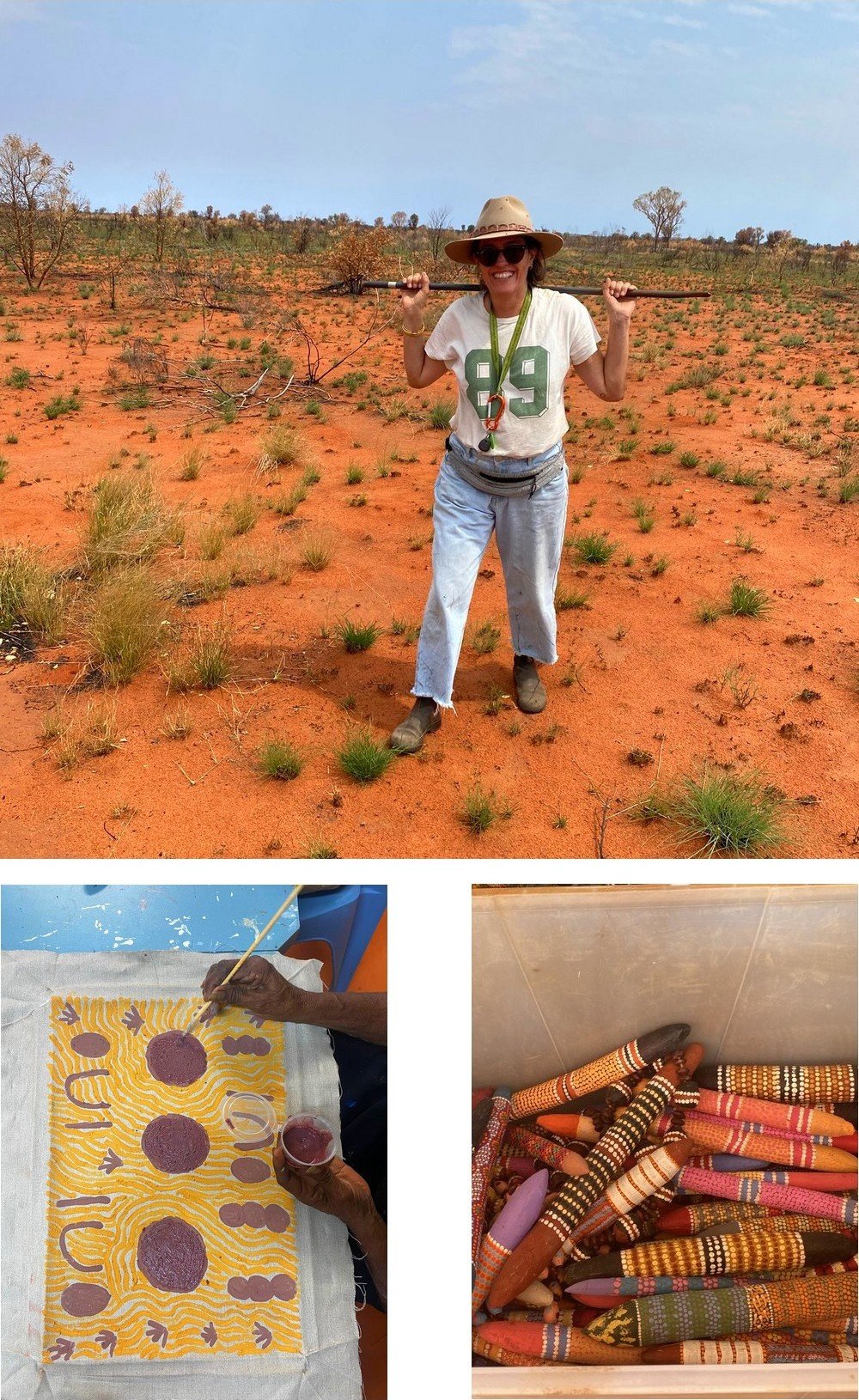
In the vibrant and often opaque world of the art market, supporting Aboriginal art centers in Australia represents both an ethical and cultural commitment. These institutions are the cornerstones of community self-determination and the guardians of a millennia-old heritage. Nakamarra, Sandrine's given name, a powerful symbol of her integration into the community, works within a network of art centers across the region. While she is a seasoned professional, her journey is above all a story of searching for meaning.
What motivates an art professional to leave urban galleries and immerse herself in the lives and challenges of the most remote communities?
Sandrine opens the doors to her personal journey, a life trajectory that transformed simple artistic administration into a true cultural vocation.
Prepare to discover the profound meaning she found in transmission, resilience, and the unbreakable bond with the land.
“I was an expat wife: twelve years in Sydney, eight years in the protective cocoon of the French Lycée. Yet, in 2013, when Australian citizenship became a reality, something shifted. It was no longer enough to be here, you had to be Australian, in the deepest sense of the word.
For me, it meant one thing: going to meet the First Nations, an imperative that required leaving the comfort of the city for the vastness of the Outback.
This was the beginning of a pilgrimage to immerse myself in the culture and origins of my new country. My unconventional background had surprisingly prepared me. Twenty-five years of travel and volunteering had given me an adaptability that I was quickly able to put to use in service of the communities.
What motivates an art professional to leave urban galleries and immerse herself in the lives and challenges of the most remote communities?
Sandrine opens the doors to her personal journey, a life trajectory that transformed simple artistic administration into a true cultural vocation.
Prepare to discover the profound meaning she found in transmission, resilience, and the unbreakable bond with the land.
“I was an expat wife: twelve years in Sydney, eight years in the protective cocoon of the French Lycée. Yet, in 2013, when Australian citizenship became a reality, something shifted. It was no longer enough to be here, you had to be Australian, in the deepest sense of the word.
For me, it meant one thing: going to meet the First Nations, an imperative that required leaving the comfort of the city for the vastness of the Outback.
This was the beginning of a pilgrimage to immerse myself in the culture and origins of my new country. My unconventional background had surprisingly prepared me. Twenty-five years of travel and volunteering had given me an adaptability that I was quickly able to put to use in service of the communities.

My years working in education, particularly with autistic children, have given me a patience and kindness that have become my currency in remote areas.
My immersion in these communities transformed my knowledge and artistic sensibility. At first, I liked what one reads in books.
Today, I have developed a keen eye. I can distinguish between a traditional artist, often confined to tourist markets, and a promising artist ready to join renowned galleries.
Living with artists taught me crucial nuances: some can paint an ancestral Tjukurrpa (Dreaming) only because they carry the right skin name, a family legacy.
Others distinguish themselves through a more contemporary, abstract or naive style of art. My role is to understand these codes, these transmissions, and then translate them for the art market.
My immersion in these communities transformed my knowledge and artistic sensibility. At first, I liked what one reads in books.
Today, I have developed a keen eye. I can distinguish between a traditional artist, often confined to tourist markets, and a promising artist ready to join renowned galleries.
Living with artists taught me crucial nuances: some can paint an ancestral Tjukurrpa (Dreaming) only because they carry the right skin name, a family legacy.
Others distinguish themselves through a more contemporary, abstract or naive style of art. My role is to understand these codes, these transmissions, and then translate them for the art market.
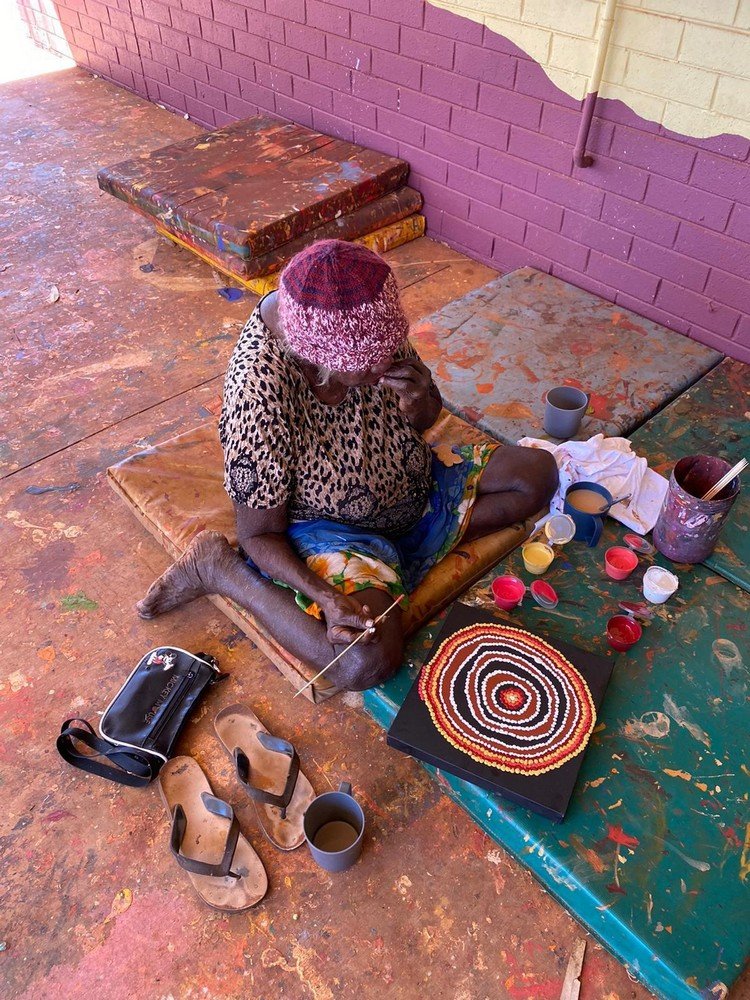
The “skin name” is an Australian Aboriginal kinship system, inherited at birth, which defines an individual’s social identity, relationships, obligations, and rights within the community.
“My work is the interface between the world’s oldest traditions and the demands of the modern market. My primary mission is human: to offer a welcoming environment where artists can paint and pass on their knowledge. These centers are vital meeting places for families, incubators of creativity.”
This is the most stimulating part. I have to find exhibition spaces that match each artist's style. I'm here to make them known and recognized, to bring them into the spotlight on the world stage. It's the best way to ensure their story endures.
I organize the art fairs, manage the website and social media—it's essential for artists to have a viable source of income. This adventure began with an artistic awakening inspired by Judith Napangardi Watson. My admiration for her work and her story led me, despite the challenges, to her community. Having the opportunity to meet her family, including her granddaughter who carries on her work, anchors my own work in a historical lineage.
When loneliness or fatigue sets in, I return to my roots. But the call of the Outback and its people always comes back. This indescribable force reminds me that my work nourishes me on a human level. I am where I am meant to be, as a transmitter of a story that must not be forgotten.
“My work is the interface between the world’s oldest traditions and the demands of the modern market. My primary mission is human: to offer a welcoming environment where artists can paint and pass on their knowledge. These centers are vital meeting places for families, incubators of creativity.”
This is the most stimulating part. I have to find exhibition spaces that match each artist's style. I'm here to make them known and recognized, to bring them into the spotlight on the world stage. It's the best way to ensure their story endures.
I organize the art fairs, manage the website and social media—it's essential for artists to have a viable source of income. This adventure began with an artistic awakening inspired by Judith Napangardi Watson. My admiration for her work and her story led me, despite the challenges, to her community. Having the opportunity to meet her family, including her granddaughter who carries on her work, anchors my own work in a historical lineage.
When loneliness or fatigue sets in, I return to my roots. But the call of the Outback and its people always comes back. This indescribable force reminds me that my work nourishes me on a human level. I am where I am meant to be, as a transmitter of a story that must not be forgotten.
The most unsettling lesson? Detachment from material possessions. In our world, we're conditioned to accumulate a successful career, a beautiful house, luxury brands to feel happy. It's a mirage. Among the Aboriginal people, this pursuit doesn't exist. They can paint works that sell for millions, and yet, money is merely a fleeting tool.
They taught me to let go: to release the need to possess and to trust in life itself. It's a powerful antidote to the anxiety of our modern society. Earning the trust of these people is like running a marathon. It takes time. They observe, because many white people are just "Land Cruisers passing through," people who come and go. My acceptance, my respect, I earned through sustained work, my investment in art centers, and above all, through my consistency. I'm still here, and that gives me a credibility I didn't have at the beginning. My role today is to be the guardian of their space and the voice of their art. It's about creating a welcoming place where the transmission of ancestral knowledge can continue, and then promoting their work so that their story is never forgotten.
They taught me to let go: to release the need to possess and to trust in life itself. It's a powerful antidote to the anxiety of our modern society. Earning the trust of these people is like running a marathon. It takes time. They observe, because many white people are just "Land Cruisers passing through," people who come and go. My acceptance, my respect, I earned through sustained work, my investment in art centers, and above all, through my consistency. I'm still here, and that gives me a credibility I didn't have at the beginning. My role today is to be the guardian of their space and the voice of their art. It's about creating a welcoming place where the transmission of ancestral knowledge can continue, and then promoting their work so that their story is never forgotten.
"They share everything. They own nothing superfluous, not even their own paintings on their walls…"
Posted in:
Default category
Related posts
-
 Archeology
What do they have to reveal to us?Read more
Archeology
What do they have to reveal to us?Read more -
 Women and Art
Creators and collectorsRead more
Women and Art
Creators and collectorsRead more -
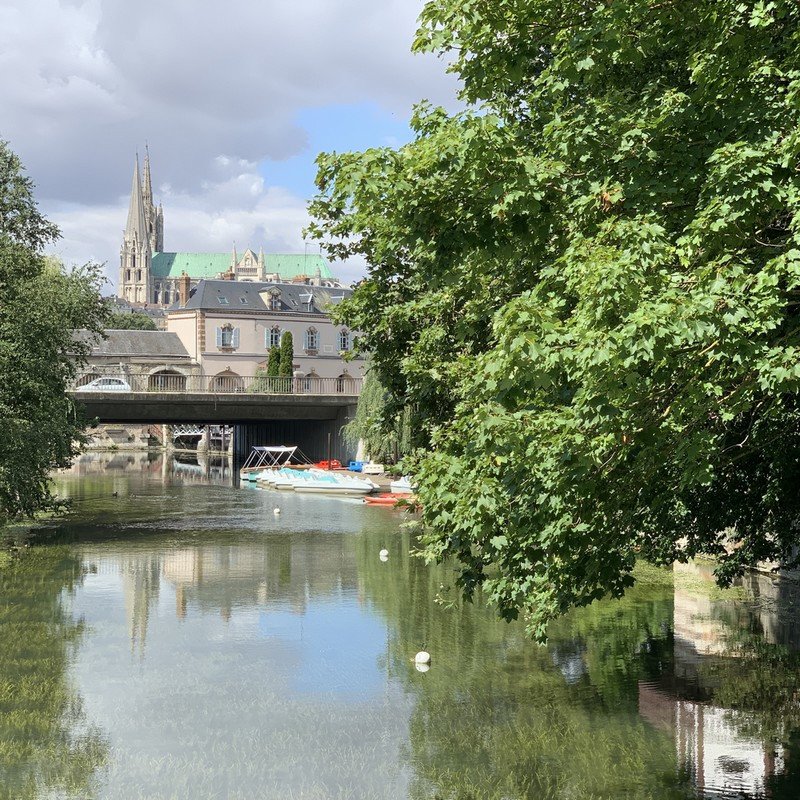 Chartres, a lifestyle
Chartres has become a “lifestyle”.Read more
Chartres, a lifestyle
Chartres has become a “lifestyle”.Read more -
 Stable
"An old stable defies time..."Read more
Stable
"An old stable defies time..."Read more -
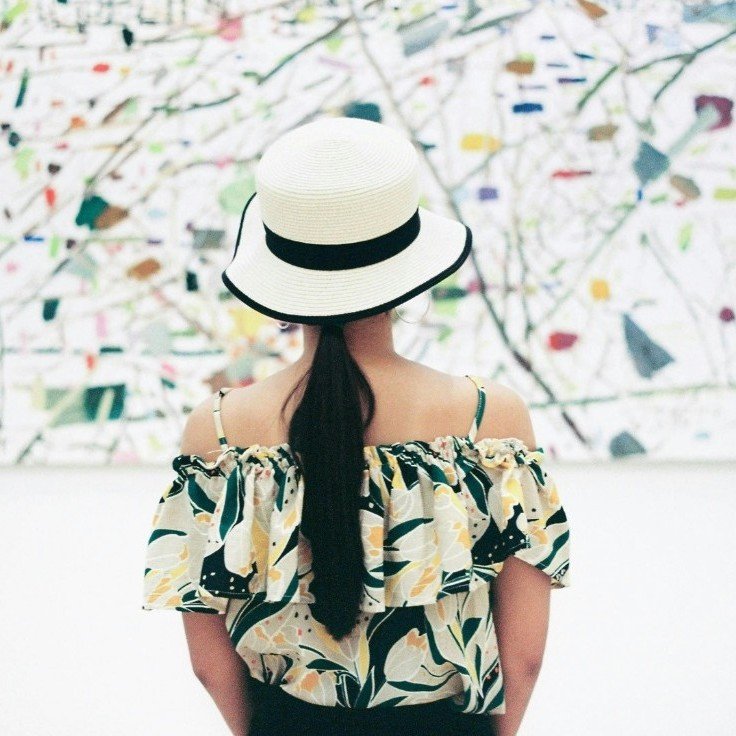 Generation Z
When museums are being overtaken by TikTok and Instagram feedsRead more
Generation Z
When museums are being overtaken by TikTok and Instagram feedsRead more
Leave a comment