




Crafts & Art
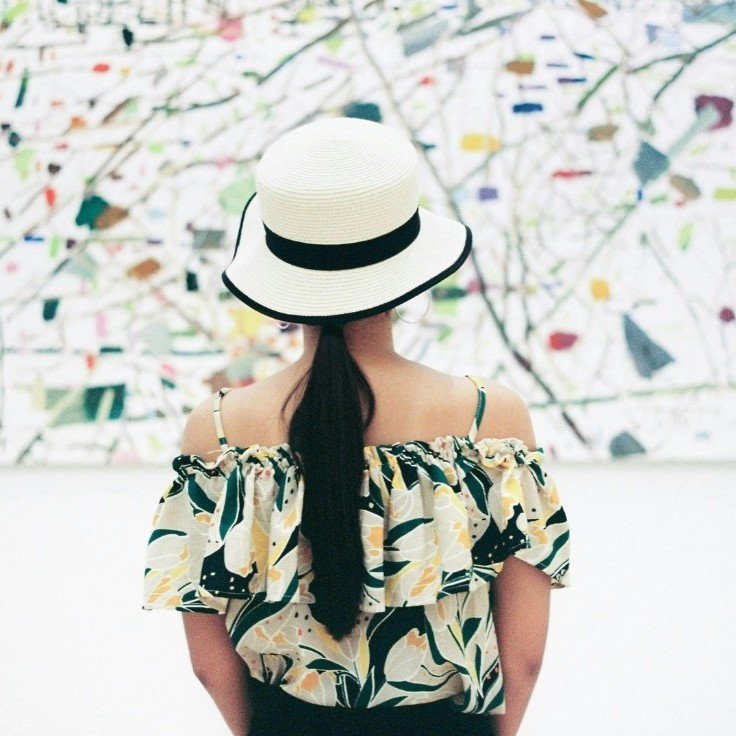
Generation Z
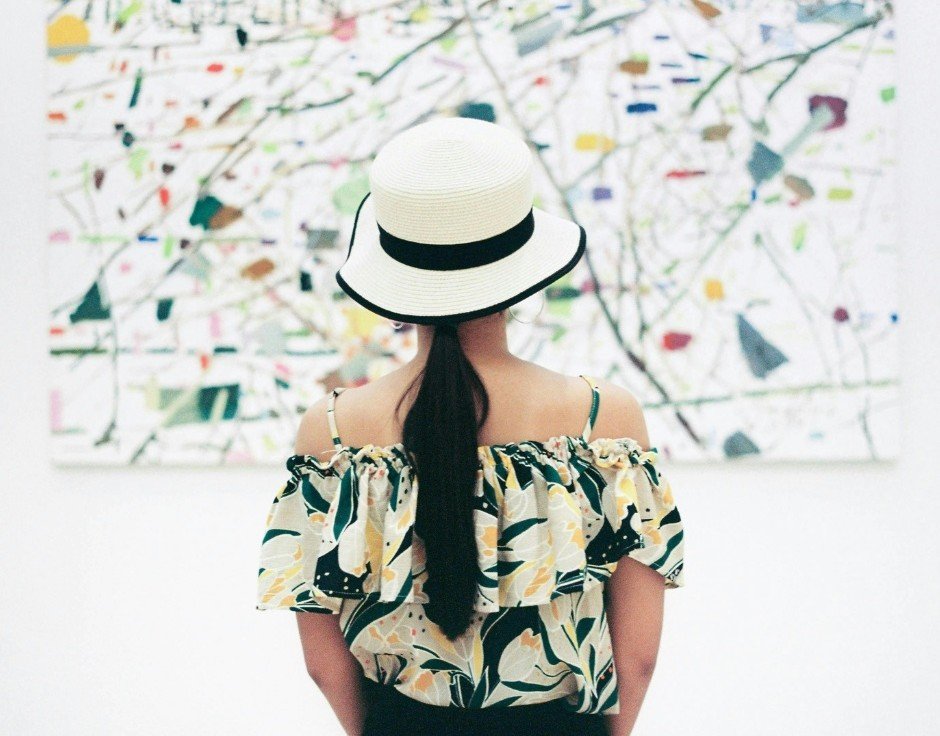
For a long time, the relationship with art was perceived as a matter for insiders, framed by the silence of museums.
For Generation Z, this relationship is undergoing a profound transformation.
It is more immediate, less inhibited, and deeply digital.
Far from being disinterested in creation, young people are reinventing their access to art by bringing it into the era of sharing and interactivity.
The revolution is primarily spatial and media-related: the smartphone has become the main cultural device.
Platforms like Instagram, Pinterest, and especially TikTok, offer unprecedented accessibility.
For Generation Z, this relationship is undergoing a profound transformation.
It is more immediate, less inhibited, and deeply digital.
Far from being disinterested in creation, young people are reinventing their access to art by bringing it into the era of sharing and interactivity.
The revolution is primarily spatial and media-related: the smartphone has become the main cultural device.
Platforms like Instagram, Pinterest, and especially TikTok, offer unprecedented accessibility.
A work of art is no longer a distant object, but an image that is scrolled through, commented on, and reposted.
The Triumph of Eclecticism and Hybridity: Accustomed to an abundance of options, this generation rejects rigid boundaries.
For a young person, handcrafted ceramics, digital painting, street art, and NFTs coexist in the same flow. The interest no longer lies in academic classification (High Art vs. Low Art), but in the visual impact and authenticity of the approach.
It is the triumph of hybrid creators who blend disciplines.
Art is a powerful medium for expressing identity.
Whether it's the art they follow online or the adoption of tattoos, young people use creation as a language to assert themselves and connect with communities.
The main criticism leveled at traditional institutions is their passive nature. Young people no longer want to be mere spectators. The visit must be immersive.
Successful museums offer interactive installations or temporary pop-ups that lend themselves to photography and sharing, the artwork becoming a step towards creating a personal memory "archived" online.
Young people are proponents of cultural self-production, encouraged by tutorials and the ease of online exhibition. Their relationship to art is therefore not solely linked to purchasing, but also to the act of making it themselves.
Today's youth are not "disenchanted" by art; they are simply more comfortable with it. She consumes it differently, filters it, mixes it, and shares it.
We surveyed the younger generation
For these future players in the art world, ambition is not limited to simple creation.
The professional project is multifaceted: it involves making a living from one's artistic creation while also embracing roles in transmission (workshops), management (galleries), or conservation.
Art is perceived as a "silent language," a therapeutic universe, and an essential refuge.
Clarity seems to prevail over idealism.
While passion is the driving force, success rests on consistency and preparation for economic realities.
Against all expectations, the "all-digital" era seems to be creating a pendulum effect.
When asked about the art forms that will experience a revival, participants cite engraving, tapestry, and floral art.
"Engraving combines materiality and gesture, a graphic rendering sought after by a generation saturated with digital images." "
The debate on AI is divisive, but a trend protecting the profession of artist is emerging.
The Triumph of Eclecticism and Hybridity: Accustomed to an abundance of options, this generation rejects rigid boundaries.
For a young person, handcrafted ceramics, digital painting, street art, and NFTs coexist in the same flow. The interest no longer lies in academic classification (High Art vs. Low Art), but in the visual impact and authenticity of the approach.
It is the triumph of hybrid creators who blend disciplines.
Art is a powerful medium for expressing identity.
Whether it's the art they follow online or the adoption of tattoos, young people use creation as a language to assert themselves and connect with communities.
The main criticism leveled at traditional institutions is their passive nature. Young people no longer want to be mere spectators. The visit must be immersive.
Successful museums offer interactive installations or temporary pop-ups that lend themselves to photography and sharing, the artwork becoming a step towards creating a personal memory "archived" online.
Young people are proponents of cultural self-production, encouraged by tutorials and the ease of online exhibition. Their relationship to art is therefore not solely linked to purchasing, but also to the act of making it themselves.
Today's youth are not "disenchanted" by art; they are simply more comfortable with it. She consumes it differently, filters it, mixes it, and shares it.
We surveyed the younger generation
For these future players in the art world, ambition is not limited to simple creation.
The professional project is multifaceted: it involves making a living from one's artistic creation while also embracing roles in transmission (workshops), management (galleries), or conservation.
Art is perceived as a "silent language," a therapeutic universe, and an essential refuge.
Clarity seems to prevail over idealism.
While passion is the driving force, success rests on consistency and preparation for economic realities.
Against all expectations, the "all-digital" era seems to be creating a pendulum effect.
When asked about the art forms that will experience a revival, participants cite engraving, tapestry, and floral art.
"Engraving combines materiality and gesture, a graphic rendering sought after by a generation saturated with digital images." "
The debate on AI is divisive, but a trend protecting the profession of artist is emerging.
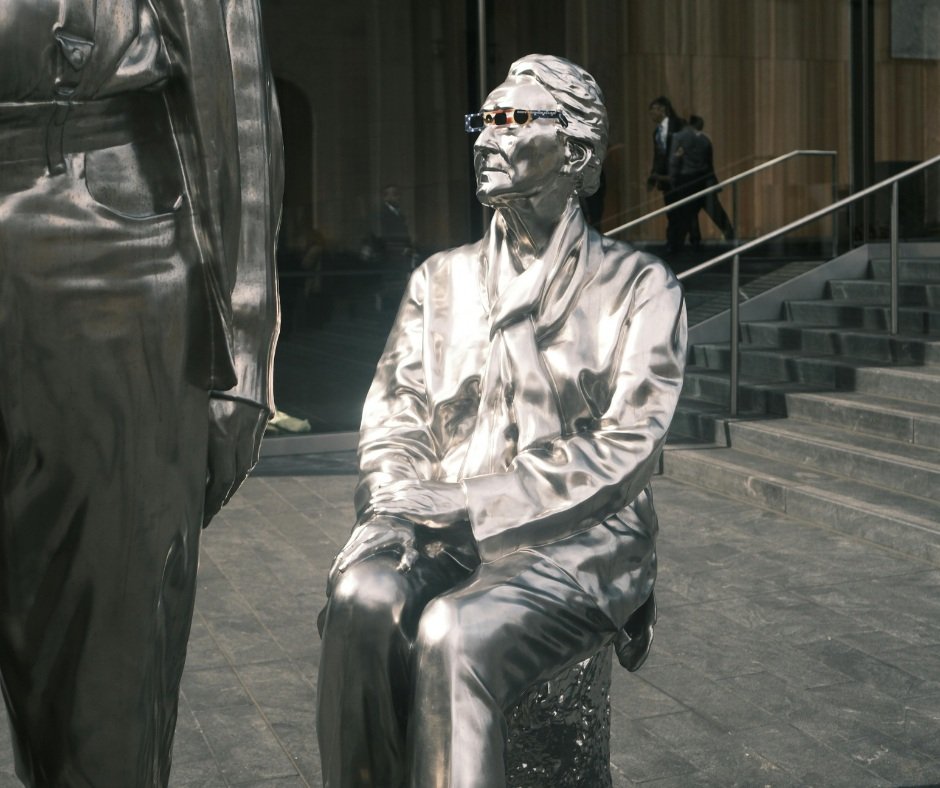
For many, AI is not a "legitimate" art form because it recycles without consent and lacks humanity.
For some: it's a robot that undermines the craft.
For others: it's a new "digital" format that has its place, but shouldn't replace the tangible.
The expression of Generation Z thus seems to lie in this paradox: being hyperconnected while simultaneously yearning for a return to the "handmade" and the real.
If art can be "beautiful" and "pleasant" without losing its depth, it must above all carry meaning if it is to stand the test of time.
If socially conscious themes were to be addressed in the future, they would be inequality, mental health, and women's rights.
Supporting a young artist isn't solely based on their raw talent, but on the coherence between their work and their message.
Where will we discover art in 20 years?
While social media (Instagram, TikTok, Pinterest) are powerful gateways today, traditional museums don't seem likely to disappear anytime soon.
The future belongs to hybrid spaces: immersive experiences blending virtual reality and physical artworks, making art more financially and geographically accessible.
Their biggest challenge?
Resisting the siren call of social media.
They know that instant validation is a mirage and that, as they so aptly put it, "comparison kills personality."
They therefore choose the most difficult, but also the most beautiful, path: that of consistency and authenticity.
Listening to these voices, we understand that the art of tomorrow will not be a competition, but a conversation.
A free conversation, sometimes unsettling, but always vibrant.
They invite us not to be afraid, to embrace our fleeting passions, and to believe that, as long as there is a hand to create, the world will remain human.
For some: it's a robot that undermines the craft.
For others: it's a new "digital" format that has its place, but shouldn't replace the tangible.
The expression of Generation Z thus seems to lie in this paradox: being hyperconnected while simultaneously yearning for a return to the "handmade" and the real.
If art can be "beautiful" and "pleasant" without losing its depth, it must above all carry meaning if it is to stand the test of time.
If socially conscious themes were to be addressed in the future, they would be inequality, mental health, and women's rights.
Supporting a young artist isn't solely based on their raw talent, but on the coherence between their work and their message.
Where will we discover art in 20 years?
While social media (Instagram, TikTok, Pinterest) are powerful gateways today, traditional museums don't seem likely to disappear anytime soon.
The future belongs to hybrid spaces: immersive experiences blending virtual reality and physical artworks, making art more financially and geographically accessible.
Their biggest challenge?
Resisting the siren call of social media.
They know that instant validation is a mirage and that, as they so aptly put it, "comparison kills personality."
They therefore choose the most difficult, but also the most beautiful, path: that of consistency and authenticity.
Listening to these voices, we understand that the art of tomorrow will not be a competition, but a conversation.
A free conversation, sometimes unsettling, but always vibrant.
They invite us not to be afraid, to embrace our fleeting passions, and to believe that, as long as there is a hand to create, the world will remain human.
Posted in:
Default category
Related posts
-
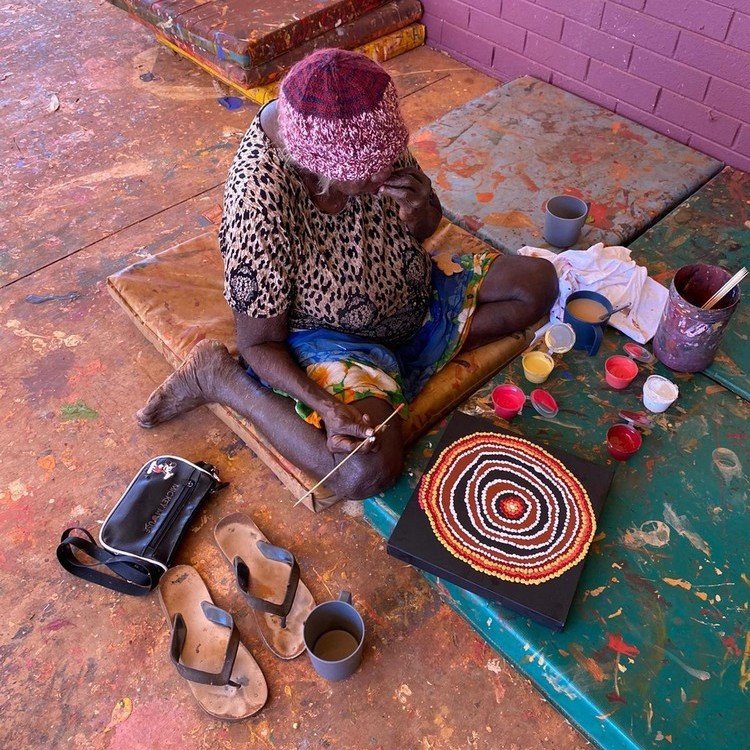 Sandrine POMNITZ
The inner journey, to the heart of the desertRead more
Sandrine POMNITZ
The inner journey, to the heart of the desertRead more -
 Archeology
What do they have to reveal to us?Read more
Archeology
What do they have to reveal to us?Read more -
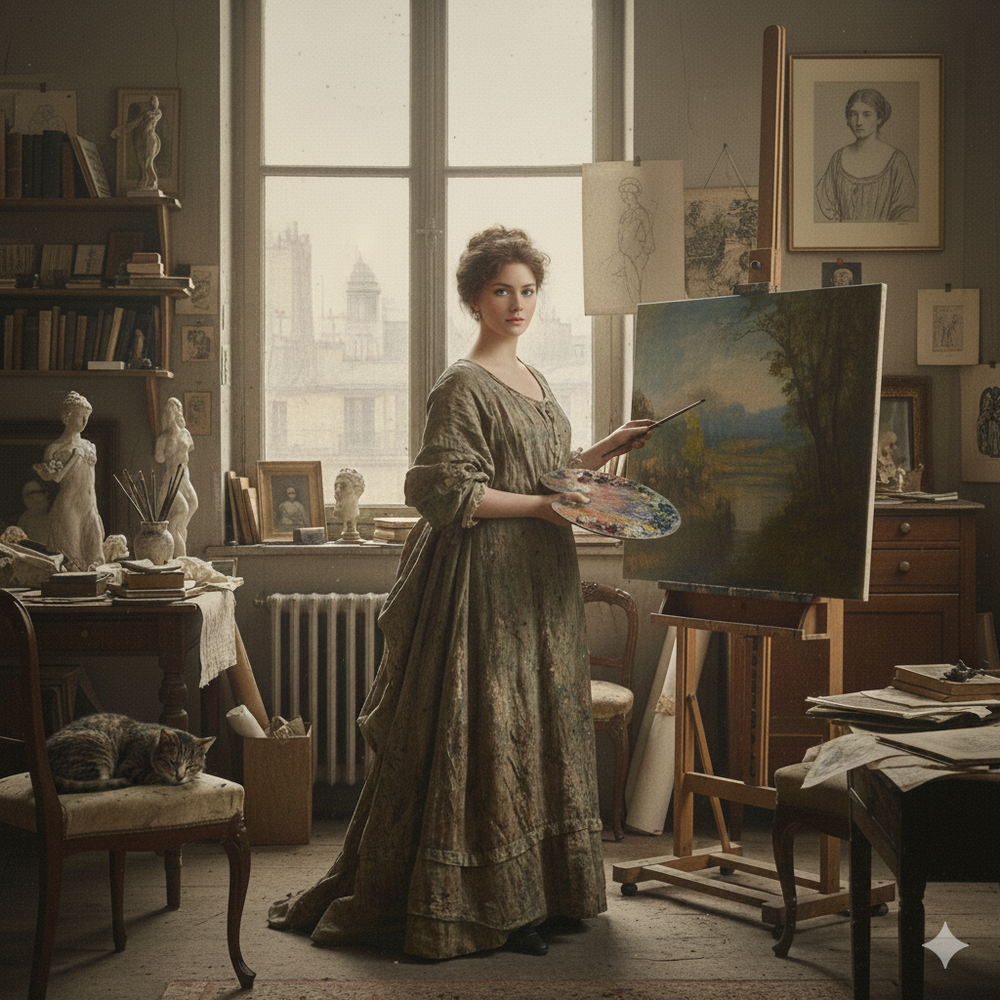 Women and Art
Creators and collectorsRead more
Women and Art
Creators and collectorsRead more -
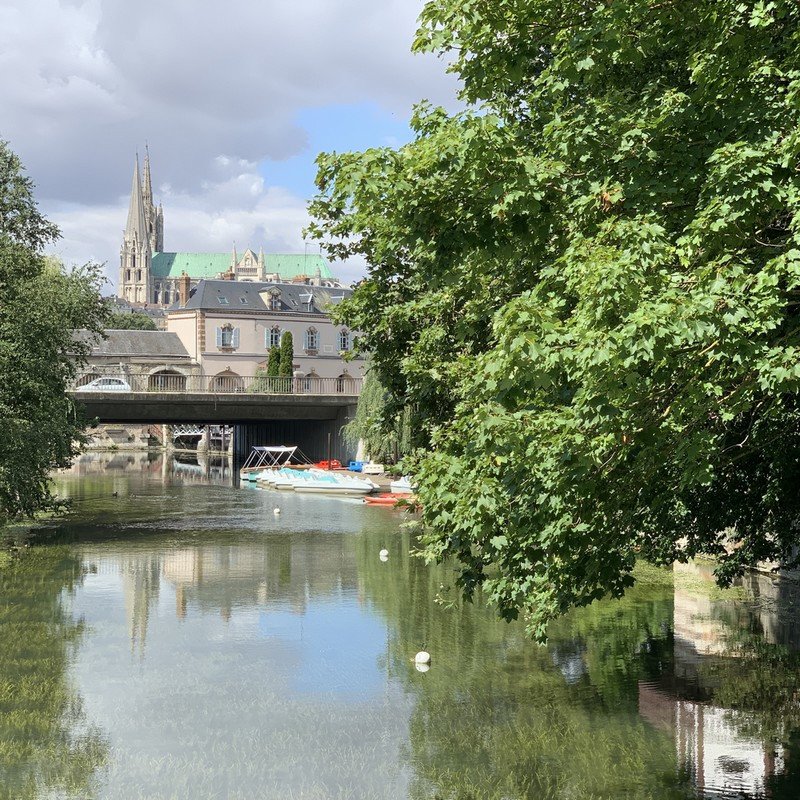 Chartres, a lifestyle
Chartres has become a “lifestyle”.Read more
Chartres, a lifestyle
Chartres has become a “lifestyle”.Read more -
 Stable
"An old stable defies time..."Read more
Stable
"An old stable defies time..."Read more
Leave a comment